15-09-2026



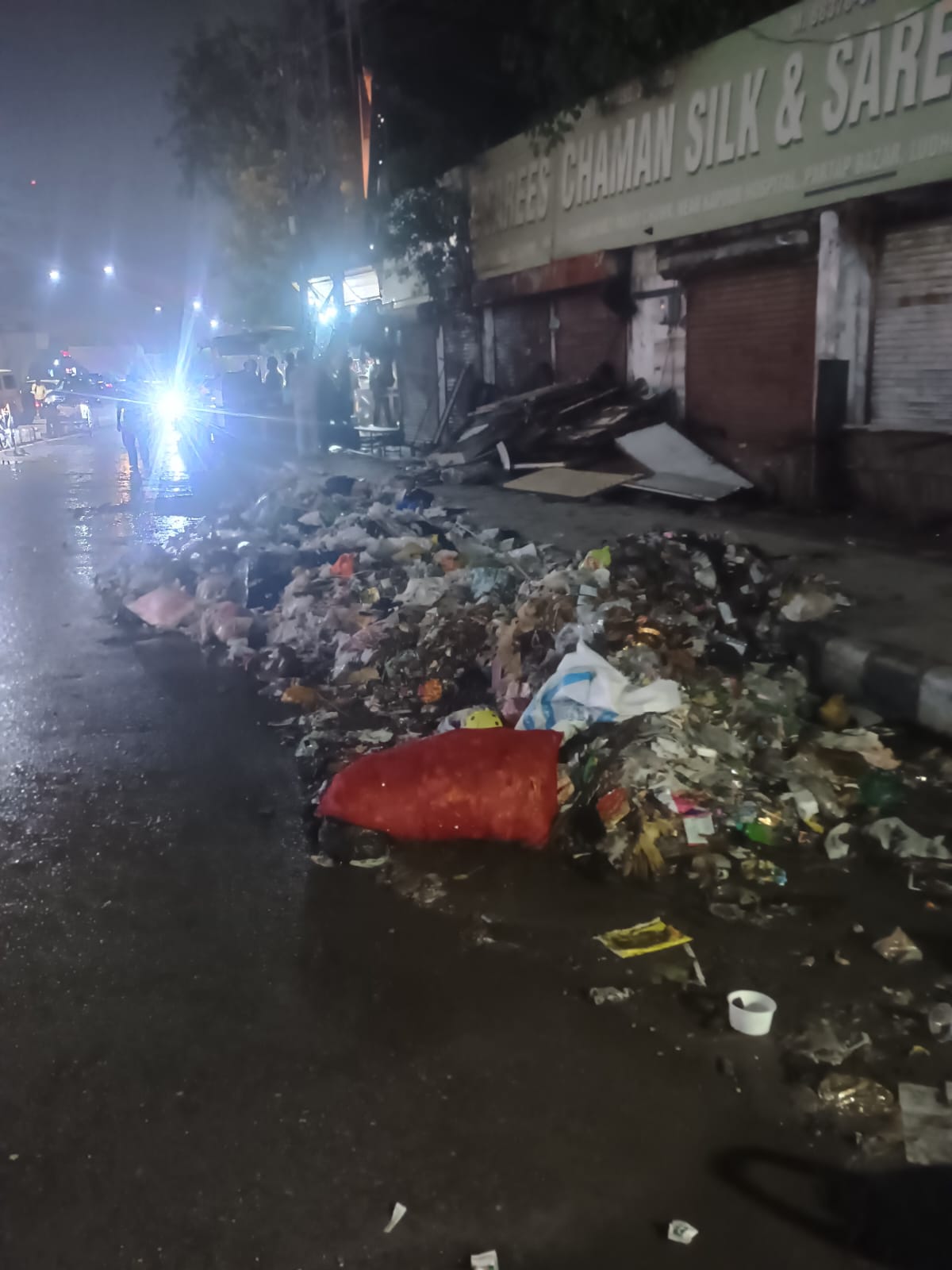
Crisis Mismanaged: Why Ludhiana Needs an Emergency Solid Waste Management Plan
Suggested Action Plan
1. Declare a Sanitation Emergency Protocol
Municipal Corporation Ludhiana (MCL) should have a predefined Emergency Sanitation Response Protocol that can be activated immediately when regular sanitation services are disrupted due to strike, heavy rainfall, flooding, disease outbreak, equipment failure or any other reason.
There should be no waiting for the crisis to become a citywide disaster.
2. Maintain an Emergency Sanitation Reserve
MCL should maintain a pre-identified reserve of:
- Sanitation workers/contractual manpower
- Drivers and supervisors
- Garbage collection vehicles
- Compactors and tippers
- JCBs/loaders
- Tractor-trolleys
- Mechanical sweeping machines
- Protective equipment
- Temporary storage/transfer arrangements
These resources should be available for immediate deployment during emergencies.
3. Pre-empanel Private and Institutional Resources
Before any emergency occurs, MCL should empanel private agencies, transporters, contractors and other suitable service providers who can be called upon at short notice.
A standing emergency rate contract could be created so that there is no administrative delay in hiring vehicles, manpower or machinery.
4. Ward-wise Emergency Response Teams
Every municipal ward should have a designated emergency sanitation team with:
- One responsible officer
- Supervisors
- Available manpower
- Vehicles/equipment
- Identified collection points
- Contact numbers
The objective should be “No Waste Accumulation Beyond 24 Hours” during an emergency.
5. Identify Temporary Waste Holding/Transfer Points
Strategic temporary waste collection/transfer locations should be identified in advance.
However, these must not become permanent dumping grounds. They should be:
- Properly managed
- Away from water bodies and drains
- Covered where necessary
- Regularly cleared
- Monitored for leachate and odour
6. Prioritise Vulnerable Locations
During a crisis, collection should first be undertaken from:
- Hospitals and healthcare facilities
- Markets and food areas
- Schools and educational institutions
- Dense residential areas
- Major roads and intersections
- Slum/informal settlements
- Areas surrounding drains and water bodies
- Places where waste is blocking traffic or drainage
This would ensure that the most serious public-health and environmental risks are controlled first.
7. Integrated Command and Control Room
MCL should establish an Emergency Sanitation Control Room during such situations.
It should receive complaints through telephone, WhatsApp and an online platform and maintain a live ward-wise dashboard showing:
Complaint → Location → Team Assigned → Vehicle Dispatched → Waste Removed → Closure
This would also establish accountability.
8. Daily Public Disclosure
During an emergency, MCL should publish a simple daily report:
- Number of vehicles deployed
- Number of workers deployed
- Number of locations cleared
- Quantity of waste removed
- Critical areas pending
- Complaints received and resolved
Transparency would prevent confusion and build public confidence.
9. Health and Vector Surveillance
Where accumulated waste remains for several days, the Health Department should undertake coordinated surveillance for:
- Mosquito breeding
- Flies
- Rodents
- Foul-air complaints
- Contamination of nearby water
- Gastrointestinal or other suspected outbreaks
Any suggestion of a viral outbreak should be based on official health surveillance and testing, rather than assumed solely from the presence of accumulated waste.
10. Protect Drains and Water Bodies
Accumulated solid waste must not be pushed into drains, canals, Buddha Darya or other water channels as a temporary disposal measure.
This is particularly important for Ludhiana because improper emergency disposal can simply transfer the solid-waste crisis into a water-pollution crisis.
11. Worker-Management Dispute Resolution Mechanism
The underlying labour issue also needs a permanent institutional mechanism.
MCL should have a Sanitation Labour Coordination Committee involving representatives of workers, MCL administration and the relevant authorities so that disputes can be addressed before they result in complete service disruption.
At the same time, essential sanitation services should have a legally and administratively workable minimum emergency staffing arrangement, while respecting workers’ legitimate rights.
12. Emergency Preparedness Exercise
MCL should conduct an annual “Sanitation Emergency Mock Drill”—similar to disaster-management exercises.
For example:
What will Ludhiana do if 30–40% of sanitation manpower becomes unavailable for 72 hours?
The answer should already exist on paper, with identified personnel, vehicles, contractors, routes and responsibilities.
The Fundamental Question
The real question is not:
“Why did the Safai Karamcharies go on strike?”
That issue must certainly be addressed.
But an equally important administrative question is:
“Why could an essential municipal service be brought to the verge of paralysis because there was no sufficiently visible and effective contingency arrangement?”
A resilient city cannot depend upon a single operational system for an essential public-health service.
The principle should be:
Regular System + Emergency Backup + Rapid Response + Accountability = Resilient Sanitation System
Suggested Concluding Position
Ludhiana needs to move from crisis management to preparedness management.
A sanitation strike may be temporary. But the accumulated waste, public-health risk, blocked roads, environmental damage and public suffering can continue long after the dispute has been resolved.
Therefore, MCL and the Punjab Government should prepare and implement a Ludhiana Municipal Emergency Solid Waste & Sanitation Management Plan, with ward-wise contingency arrangements, reserve manpower, emergency vehicles, private-resource empanelment, temporary transfer facilities, public-health coordination, real-time monitoring and a defined 24/48/72-hour response mechanism.
A city should never have to wait for a crisis to discover that it has no Plan-B.
For Ludhiana, the lesson from this episode should therefore be clear:
“Sanitation is an Essential Public Service. Its continuity must never be left to chance.”
Col CM Lakhanpal
Member PAC Mattewara Jungles, River Satluj, and Buddha Darya, Ludhiana.
94171 38044
Our Gallery